%20white.png?width=1192&height=842&name=Danbury%20Wine%20Estate%20Logo%20(short)%20white.png)
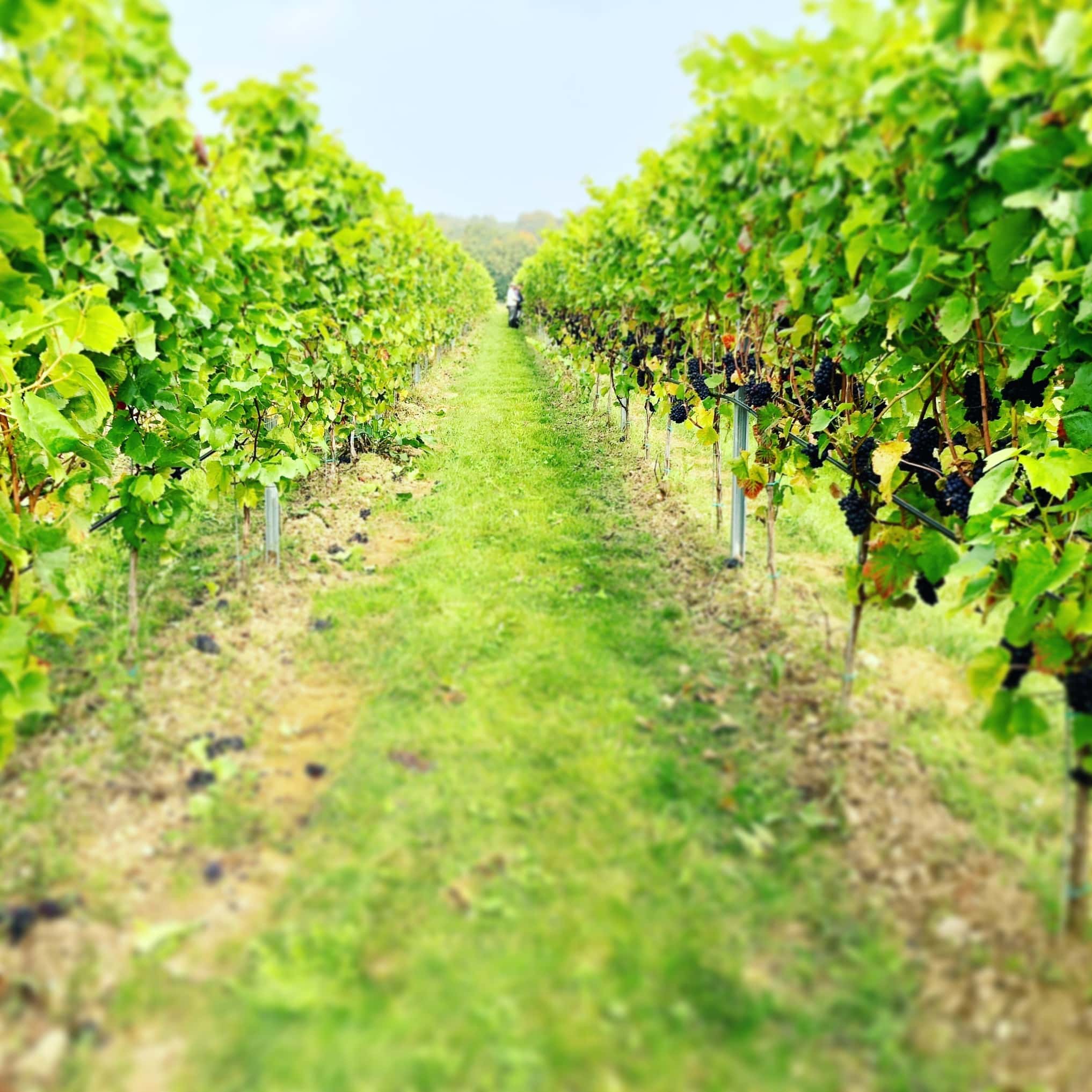
Like any agricultural ecosystem, vineyards are vulnerable to pests and disease. Our Integrated Pest Management (IPM) programme protects our vines using environmentally responsible methods that preserve biodiversity and maintain the delicate balance of the vineyard ecosystem. By minimising chemical intervention, we safeguard beneficial wildlife while ensuring healthy, high-quality grape production.
Throughout the growing season, we use mechanical weeding to manage under-vine vegetation without herbicides. During winter, a local flock of sheep grazes between the vineyard rows. This natural approach keeps grass short, controls weeds, and improves soil structure — all without compacting the soil or damaging the vines.
Healthy soil is essential for producing exceptional grapes. After harvest, we compost our grape marc (the leftover skins, seeds and stems from winemaking) and return it to the vineyard. Combined with natural chicken-manure pellets, this organic fertilisation enriches soil health and improves nutrient availability.
Our winery has been purpose-built with energy efficiency and sustainability at its core. Solar panels on the south-facing roof generate renewable electricity on site, significantly reducing our carbon footprint and reliance on external energy.
A carefully engineered thermal envelope, creating an innovative above-ground cellar, provides naturally stable temperatures for wine ageing. This design eliminates the need for powered climate control, dramatically lowering energy consumption while ensuring optimal conditions for our wines to age.
By harnessing solar energy and passive temperature regulation, we are committed to low-carbon wine production. Our sustainable winery infrastructure supports long-term environmental responsibility without compromising wine quality.
We actively minimise waste across all aspects of our operations. The principles of Reduce, Reuse, Recycle underpin our materials management and resource use.
All winery wastewater (effluent) is naturally purified through a carefully designed series of ecologically balanced wetland cells. This natural filtration system cleans and returns water safely to local waterways.
Motion sensors ensure that only active workspaces are illuminated, reducing unnecessary energy consumption. Any materials that cannot be reused are recycled responsibly, reinforcing our commitment to environmentally sustainable wine production.
As long-term supporters of the The Woodland Trust, we recognise the vital role trees play in supporting local wildlife, improving biodiversity, and strengthening the wider environment. Over the years, we have planted more than 8,000 trees across our estate, contributing to habitat restoration and long-term carbon capture.
This includes a registered woodland established as part of The Woodland Trust Jubilee Woods Project, created to celebrate the Diamond Jubilee of Queen Elizabeth II. The woodland enhances ecosystem resilience while providing a natural sanctuary for birds, insects, and native species.
To ensure responsible water management, we have created a naturally fed six-million-litre reservoir that supplies our vineyard irrigation system. This sustainable water source reduces pressure on mains supply and supports climate-resilient viticulture.
Each year, the reservoir becomes a thriving habitat for breeding flocks of Canada geese and greylag geese, further enriching estate biodiversity and reinforcing our commitment to wildlife conservation.
All vineyards are enclosed with deer fencing, protecting both our vines and the local herd of fallow deer. This careful management prevents damage to trellising and wires while safeguarding animal welfare, ensuring harmonious coexistence between agriculture and wildlife.