%20white.png?width=1192&height=842&name=Danbury%20Wine%20Estate%20Logo%20(short)%20white.png)


Danbury Ridge Winemaker, Liam Idzikowski on an extraordinary growing season, a second vintage with Domaine Duroché and the earliest harvest yet at Danbury Ridge.
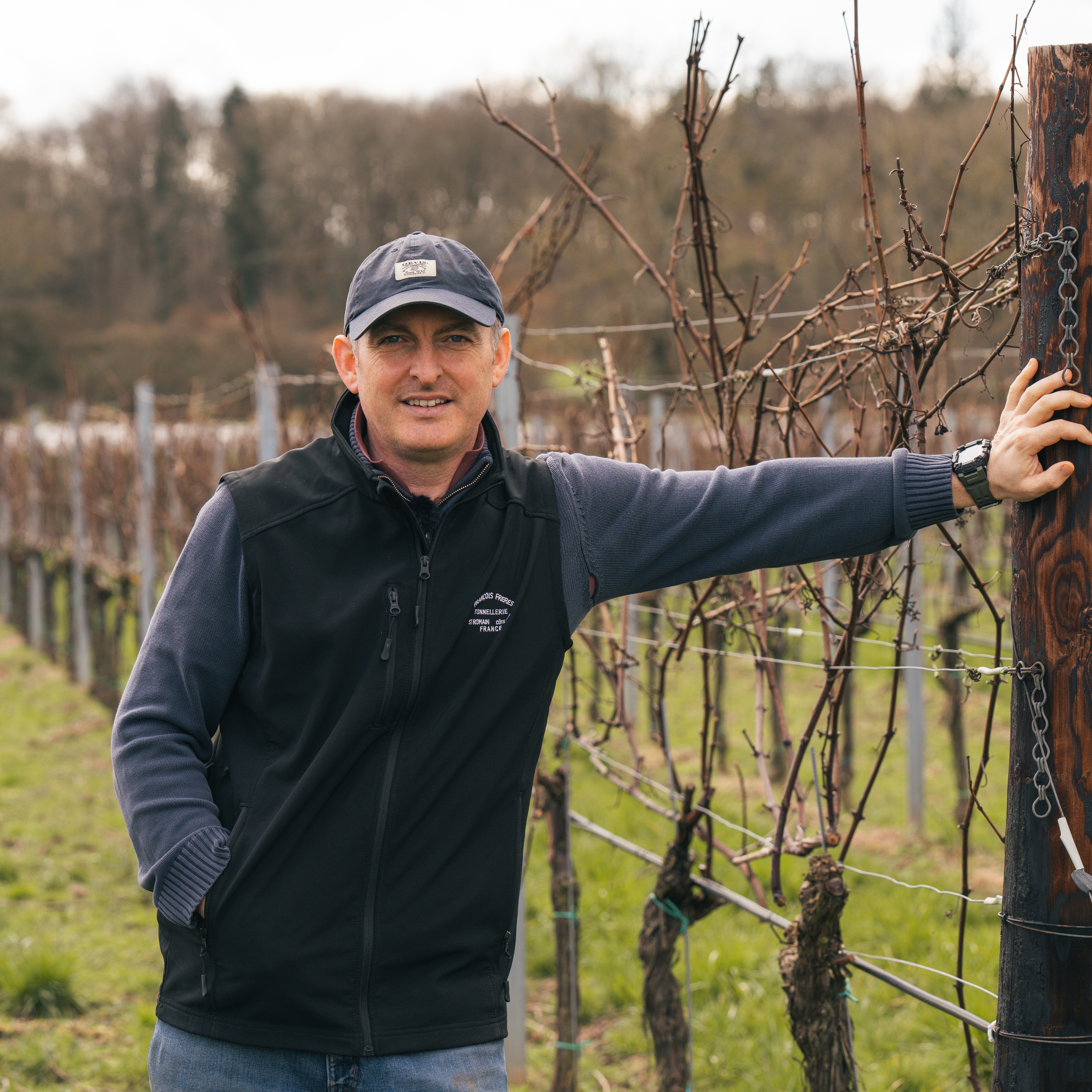
I have recently returned from Burgundy, where I joined Pierre and Marianne Duroché for a second harvest and visited Alex Moreau at his domaine in Chassagne-Montrachet.
Alex will continue his own project here in the Crouch Valley this year, while fifth-generation Meursault winemaker Charles Boigelot, one of Burgundy’s emerging talents, will also be making wine in Essex for the first time.
As a winemaker, it was a particularly interesting vintage to experience first-hand, with the effects of climate change increasingly tangible. Burgundy has endured repeated periods of extreme heat, with temperatures reaching 40°C and above, as well as the significant fire above the vineyards at Nuits-Saint-Georges in July.
Across the parcels I visited, yields were tiny for the third year in succession. What struck me most, however, was the speed at which the grapes were developing.
In those conditions, the window between full phenolic maturity and dehydration becomes remarkably narrow. Fruit can move from balanced ripeness and freshness to the beginnings of raising in a matter of days. As berry weight falls, sugars concentrate rapidly, making the timing of picking increasingly critical.
Reported sugar levels across both the Côte de Beaune and Côte de Nuits were notably higher than during my visit for the 2025 harvest. Pierre and Marianne were among the earliest to begin picking in Gevrey-Chambertin, including from their Grand Cru sites. It was a vivid reminder that ripeness is not simply a matter of sugar accumulation. Increasingly, the challenge is to bring sugar, acidity, phenolic maturity and berry condition into balance at the same moment.
The next Danbury Ridge / Domaine Duroché cuvée
Pierre and Marianne will return to Danbury Ridge towards the end of September to continue the project we began together last year.
Before then, the 2025 cuvée will be taken out of barrel and Clayver to make way for the 2026 wine. We are very pleased with how the first wine is developing and, rather than changing the approach significantly, this year offers us an opportunity to build continuity between vintages.
We expect to work with broadly the same vineyard parcels and clones, using the same old oak barrels from Pierre’s cellar and the same 400-litre Clayver.
That continuity is important. The intention is not to reinvent the wine each year, but to observe how the vintage and fruit express themselves through the same vessels and winemaking approach.
Back in the Crouch Valley
Returning to Essex, some of the parallels with Burgundy are difficult to ignore.
We have had our own wildfires across the county this summer, with large areas of tinder-dry arable land burnt around us. Following repeated heatwaves, much of the country remains in drought and hosepipe restrictions are widespread.
By the end of August, growing-season rainfall at Danbury Ridge totalled just 74 mm, compared with approximately 140 mm recorded by Pierre and Marianne in Gevrey-Chambertin.
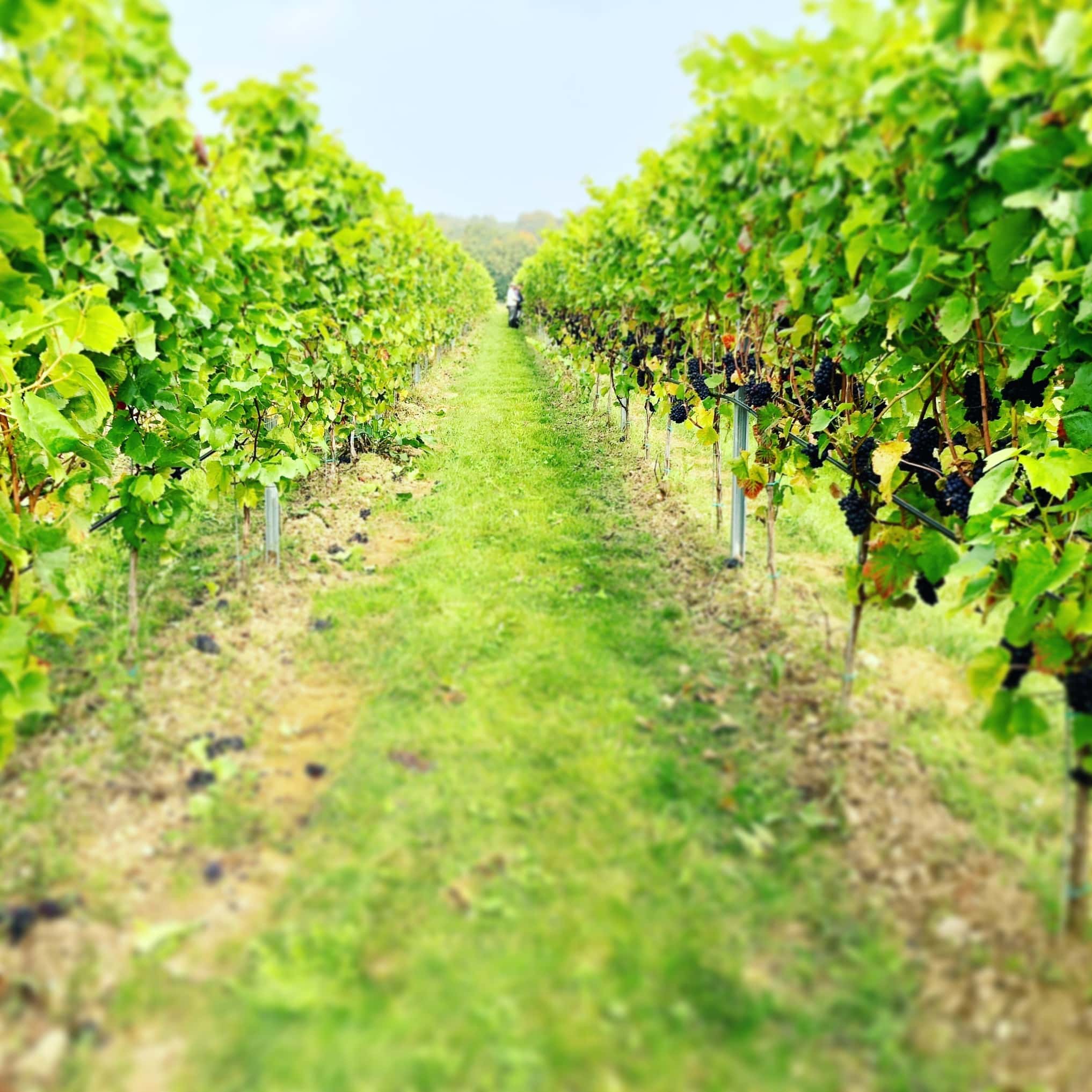
And yet, at that point in the season, the contrast in our vineyards was extraordinary. The grass was entirely yellow, while the vines remained green, with healthy canopies and no visible signs of hydric stress.
This is exactly the kind of year in which London Clay demonstrates why it is so well suited to vinegrowing. Its ability to hold and slowly relinquish water provides a buffer through prolonged dry conditions, and the benefit is particularly apparent now. It is one of the characteristics that makes the Crouch Valley so interesting, particularly for Pinot Noir.
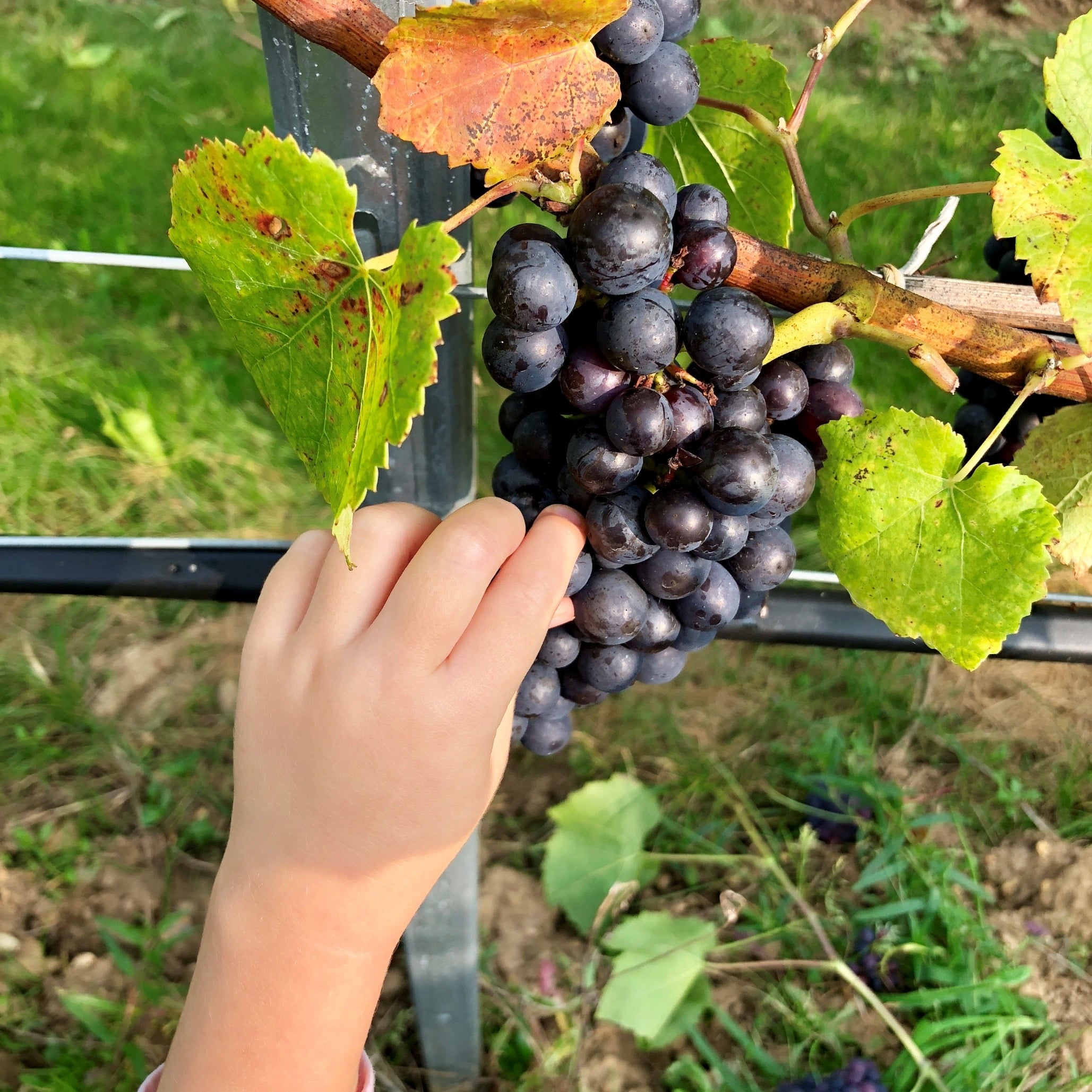
Perhaps more surprising is what we are seeing in the crop itself. Despite the drought, yields across our established vineyards are optimal and berry size remains unexpectedly generous. The bunches are well formed, development is balanced and, taken together, these factors make 2026 perhaps the closest we have come to the 2018 vintage.
The grapes are also exceptionally clean, with negligible disease pressure. Although the weather is now beginning to turn, the fruit remains in good condition. Ripening is progressing quickly, and with healthy canopies and clean bunches going into the final stages of the season, we remain very positive about fruit quality.
Part of the explanation for this year’s crop began last year. Grapevine yield potential is determined across two growing seasons, with the foundations of this year’s inflorescences laid during bud development in 2025. Good fruitfulness coming into 2026, followed by successful flowering and fruit set this summer, has given us the crop level and berry development we see today.
The clay has provided the other half of the equation, maintaining water availability through an exceptionally dry growing season.
An exceptionally early harvest
Together, these factors have brought us to harvest remarkably quickly.
This week we began picking for our sparkling wine, Solstice, which will make this the earliest start to harvest at Danbury Ridge, around a week earlier than in 2022.
More unusually, for the first time we expect to pick Pinot Noir for still wine in September. If the season continues on its current trajectory, harvest should be complete before 1st October.
Early harvest dates inevitably attract attention, but for us the date itself matters less than the condition of the fruit when it reaches the winery. What we are looking for is physiological ripeness and balance, without the disease pressure or water stress that can complicate an early harvest.
Over the next few weeks, there is a great deal of picking to do, and much can change in that time, but at this stage I am feeling cautiously optimistic about the wines that 2026 could produce.
And if everything really is in by the end of September, there is even the possibility of putting our feet up in October.
Maybe.